What Makes a Good Cape Town Listing Photo
A good Cape Town listing photo is sharp, level, honestly lit and easy to read at thumbnail size. It shows a real room or exterior in its best genuine light, not a distorted or over-processed version of the house. The best time to shoot depends on the property: interiors like soft daylight, west-facing Atlantic Seaboard façades often look better later in the day, and east-facing or False Bay homes often look better in the morning. Midday glare, deep mountain shadow and messy, unprepared rooms are what usually flatten a set.
What buyers actually need to see in a frame
Adrian Goslett of RE/MAX of Southern Africa has said that buyers will rule out options based on listing photographs alone, and that rooms shot from the wrong angle can look smaller than they are, while poor light can make a home look dark. That is a fair brief for every frame you publish.
In practice, a strong listing photo does four things:
It is readable as a thumbnail. On Property24, the first image has to make sense when it is small. Busy foregrounds, tilted verticals and murky exposures disappear in a search grid.
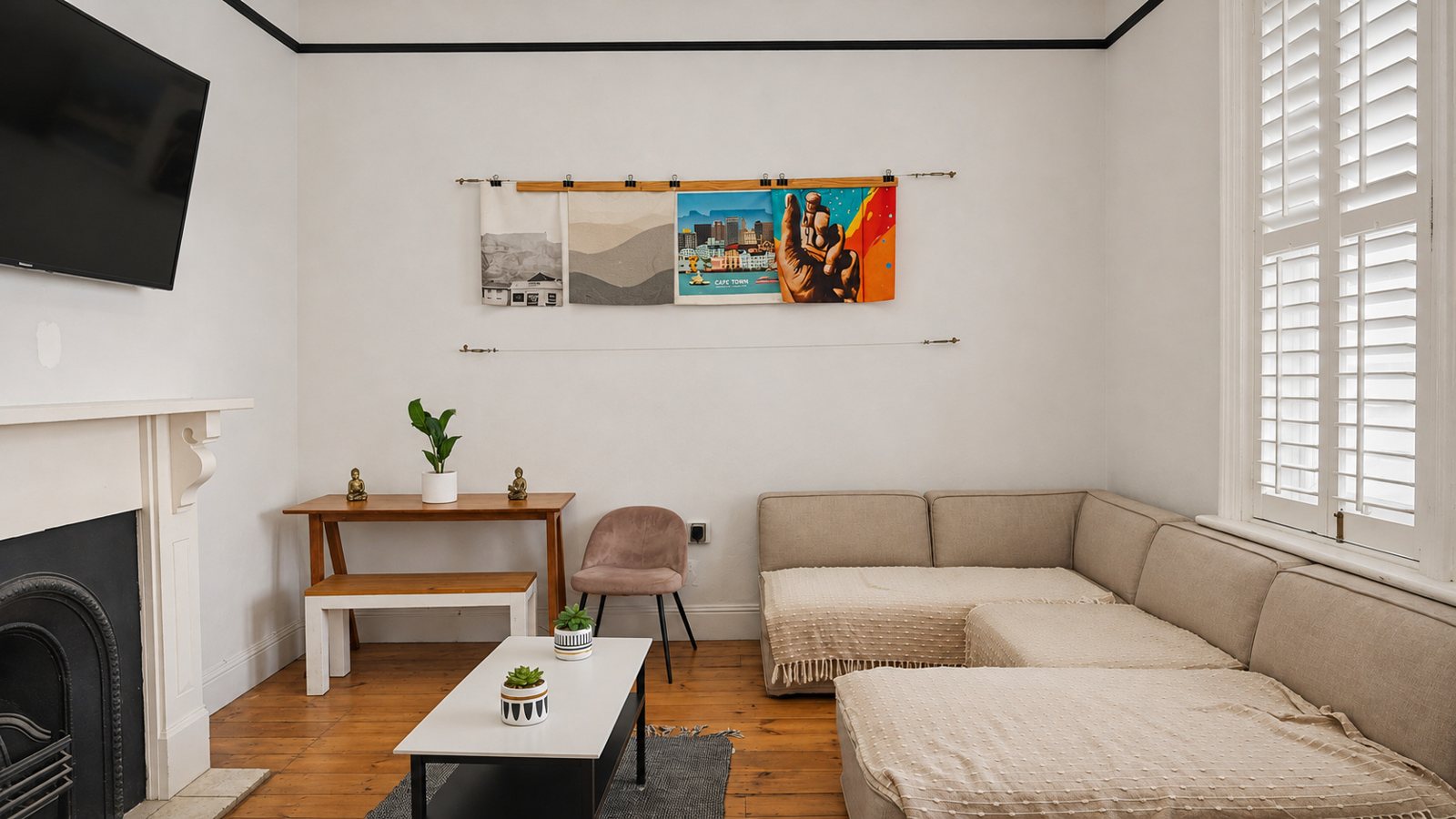
It is level and composed. Walls should be upright. The camera is usually at a natural height, not from the ceiling and not from the skirting. A wide lens can show a room truthfully; it should not stretch it into a hall that does not exist.
It is lit, not blasted. You should be able to see both the interior and, where it matters, the view through the window. That often means careful exposure, not a single harsh phone snapshot or a neon-bright edit.
It is complete and honest. The room is tidy, but it is the actual room. Sky replacements, invented views and furniture that will not be there on viewing day all create a problem you then have to explain in person.
Airbnb makes a similar request for short-stay photos: horizontal frames, natural light, a straight camera, and a mix of wide, mid and close-up views. The platforms differ; the standard of a useful picture does not. For portal counts and pixel sizes, see how many photos a Property24 listing needs.
When to shoot in Cape Town
There is no single perfect hour for the whole city, because the peninsula faces more than one way and the mountain makes its own shade.
Interiors are usually easiest in the middle of the day, when rooms have plenty of natural light but you are not staring into a shaft of direct sun. Open the curtains. Lights can be added in dark corners. A lightly overcast day is often kind to interiors, because the light is even.
East-facing homes, and many properties looking towards False Bay, often photograph well in the morning, when the façade and the view are in light rather than in shadow.
West-facing homes, including a large share of the Atlantic Seaboard, often look better in the afternoon and towards the evening, when the sun is on the sea-facing side. That is also when a twilight set, if you have booked one, can follow on naturally. We discuss that separately in when twilight photos help a sale.
The City Bowl and the slopes of Table Mountain can fall into shade earlier than a map would suggest. If the façade is important, say so when you book, so the visit is timed around the light rather than around a generic mid-morning slot.
We are describing orientation and light, not promising weather. Wind, rain, haze and low cloud all change the plan, and aerial frames are the first to move to a fallback date. A good scheduler would rather shift an exterior than publish a grey, battered hero image of a house that usually sits in full sun.
What usually goes wrong
Most weak listing sets fail for ordinary reasons: the house was not ready, the shoot was timed for the wrong side of the building, the camera was tilted, or the edit was pushed so far that the rooms no longer look like themselves. Another common issue is an incomplete set — five handsome living-room frames and no honest picture of the third bedroom or the parking.
Preparation remains the cheapest improvement. A cleared kitchen, made beds and a mown lawn will do more than any preset. Use the preparation checklist the day before the photographer arrives.
How to brief the shoot
Tell the photographer which way the main façade and the main view face, which rooms matter most, and whether the cover image should be an exterior, a living room or a view. Mention estate access, pets, occupancy and any twilight or aerial brief. The more precise that note, the easier it is to pick a time of day that helps the property rather than fights it.
Frequently asked questions
Is midday always a bad time?
Not for interiors, and not for every exterior. Midday can be harsh on a west-facing white façade or a pool, and kind to a dim ground-floor flat. The property, not the clock, should decide.
Should every photo be taken in golden hour?
No. Golden hour is a short window and is most useful for exteriors and views. Waiting for it to photograph every bedroom is rarely practical, and interiors often look better in open daylight.
Do you correct colours and verticals?
Yes. Professional editing should straighten verticals, balance colour and recover a fair amount of interior and window detail. It should not invent a view or a room size the house does not have.
What if the only available appointment is at the wrong time of day?
Say so. Sometimes interiors can be shot on the first visit and the exterior completed when the light is right. That is better than forcing a cover image in deep shade.
If you have a listing that needs to be shot in the right light, book a Cape Town property shoot, or browse finished stills in the portfolio.
