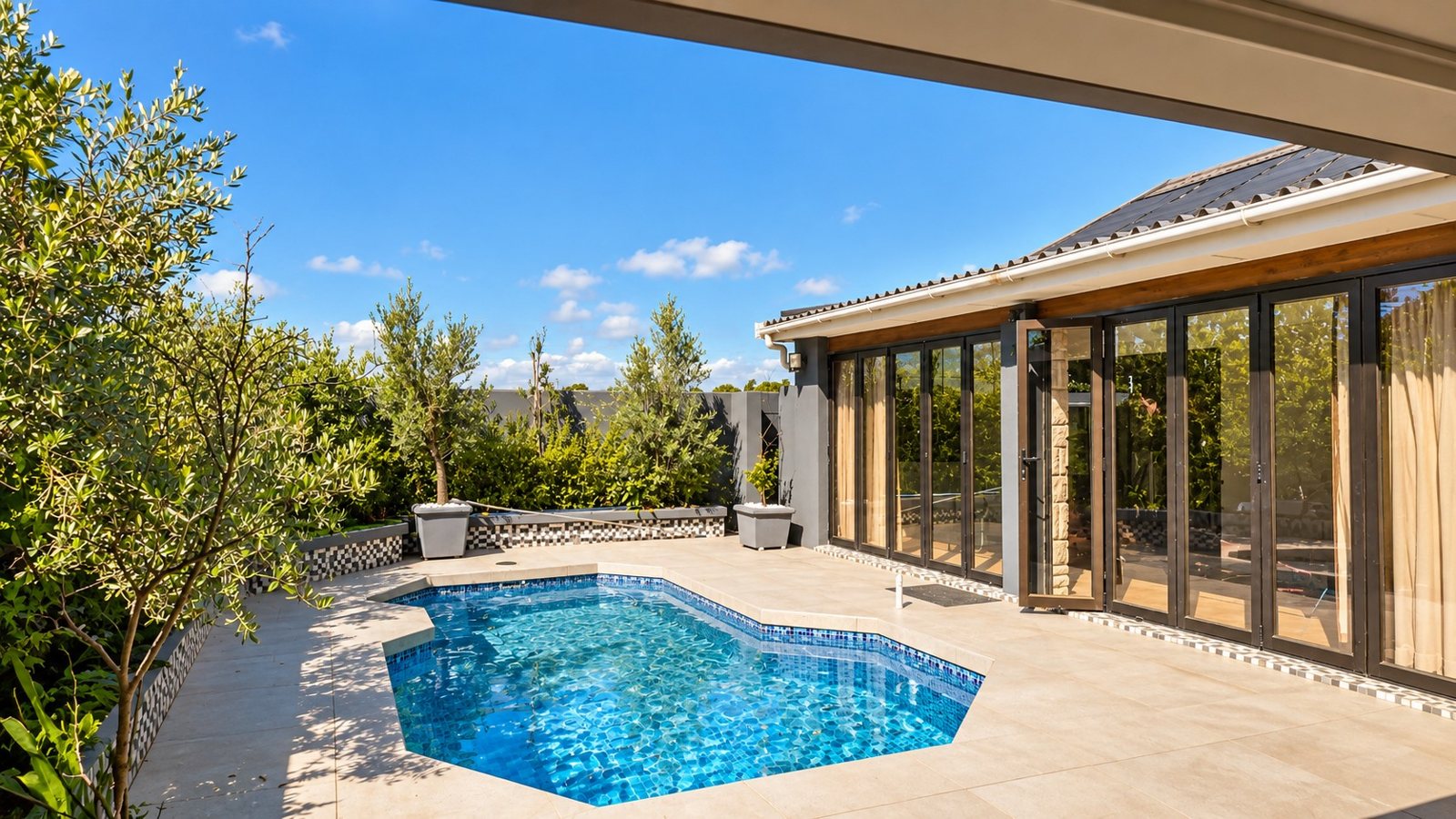
When Twilight Photos Help a Cape Town Sale
Twilight property photos are worth booking when the exterior is a real part of the sale — lighting, a pool, a façade, or a sea or mountain outlook that comes alive at dusk. They are a short, timed set of exteriors (and sometimes a lit interior looking out), not a replacement for the daylight gallery. In Cape Town they often make the most sense on the Atlantic Seaboard and on houses with working outdoor lighting. If the property is a mid-floor apartment with no exterior story, spend the budget on a complete daylight set instead.
What “twilight” actually means on a listing
Photographers use twilight, dusk and blue hour to describe the window just after sunset (or, less often, just before sunrise) when the sky still has colour and the house lights read clearly. The aim is a balanced frame: warm windows, a deep but detailed sky, and a façade that is not a black cut-out. It is a different picture from a midday exterior, and it is usually used as a cover or a hero image, alongside a full daylight set.
It is not the same thing as photographing the whole house after dark, and it is not an “AI twilight” filter applied to a daytime photo. If a studio offers a digital dusk effect, that should be described honestly, because buyers who arrive at 11:00 will see the property in daylight.
When dusk helps a Cape Town listing
Book a twilight set when one or more of these is true:
The exterior architecture, outdoor lighting, or a pool and patio are a genuine feature of the home.
The property faces west, as many Atlantic Seaboard homes do, and the evening light on the sea or the façade is part of why someone would buy it.
The listing needs a distinctive cover image in a suburb where many daylight exteriors look similar.
You are marketing a show house, a development unit or a high-value home where the evening atmosphere is part of the brief.
Skip it, or leave it as an optional extra, when the property has little exterior presence, when the outdoor lights do not work, or when the budget is already tight against a complete interior set. Twilight will not compensate for missing bedrooms or dark living rooms. For the base gallery, start with Property24's 16-image guidance and a well-timed daylight shoot, which we cover in what makes a good listing photo.
How the appointment works
Twilight is a timed visit. The useful window is short, so the house must be ready in advance: outdoor lights working, curtains arranged so windows glow rather than glare, the pool on if it is meant to be seen, cars off the driveway, and the garden tidy. If interiors will also be framed from the outside, the rooms that face the camera need to look finished, with lights on and clutter gone. The preparation checklist still applies.
In practice, the daylight interiors and many exteriors are often shot earlier the same day, with the photographer staying on, or returning, for the dusk window. Weather and cloud can move the plan. A heavy overcast evening can still work, because a textured sky is useful; rain and wind can force a fallback date, especially if aerial dusk frames were also requested.
Cape Town evenings also change with the season. Winter sunsets are earlier, which can be easier to schedule after a day's interiors; summer sunsets are later and may need a longer wait on site. That affects the diary more than it changes the idea of the shot.
Cost and what to ask
Twilight is typically an add-on, not the core package. Visuals by Kade, a Cape Town photographer, lists twilight and dusk exteriors as available on a page that otherwise prices a standard property from R1,500 and a large property at R2,250, without a separate twilight figure on that page. Other South African studios publish small twilight add-ons, but we will not treat those as Cape Town rates when the business is based elsewhere. Engage Media will quote twilight as part of the mix you select on the quote builder, or as an extra agreed on the brief.
Ask, before you book, how many finished dusk frames you will receive, whether the visit is combined with the daylight shoot, and what happens if the sky is unusable. Also confirm that the outdoor lights work; a twilight photo of a dark façade rarely earns its fee.
Frequently asked questions
Can you just add a dusk sky in editing?
We photograph the property at dusk when you book twilight. A composite or simulated sky is a different product and should be agreed and labelled honestly, because it is not the same as being there at that hour.
Do we need twilight photos and drone photos?
Only if both earn their place. Aerials explain the stand and the views; twilight explains the evening presence of the house. Some listings benefit from both, on two carefully timed windows, with a weather fallback.
Will the interior lights look natural?
They should. The aim is a house that looks occupied and welcoming, not a showground. Replace blown bulbs before we arrive, and avoid leaving screens and odd feature colours in the windows that face the camera.
Is sunrise as useful as sunset?
Sometimes, for an east-facing façade or a False Bay outlook. Sunset is the more common brief, simply because it is easier to combine with a daytime shoot. Mention the orientation when you book.
If an evening exterior would help the listing, add it to your brief and request a quote. Examples of how Cape Town homes present in different light are in the portfolio.
